Van Gogh can't sleep, this is the new book featured on Porch Stories.

Spotlight Artist/Scientist Maria Sibylla Merian
Maria Sibylla Merian (2 April 1647 – 13 January 1717) was a German-born naturalist and scientific illustrator, a descendant of the Frankfurt branch of the Swiss Merian family. Merian was one of the early European naturalists to observe insects directly.


Reprinted with from Women in Science. Copyright © 2016 by Rachel Ignotofsky.
Published by Ten Speed Press,


 |
| This is wonderful book about her life |
 |
| Images from the book above |
 |
| a page from the book |


For more information about Maria Merian I recommend these videos
Caterpillars are Cool
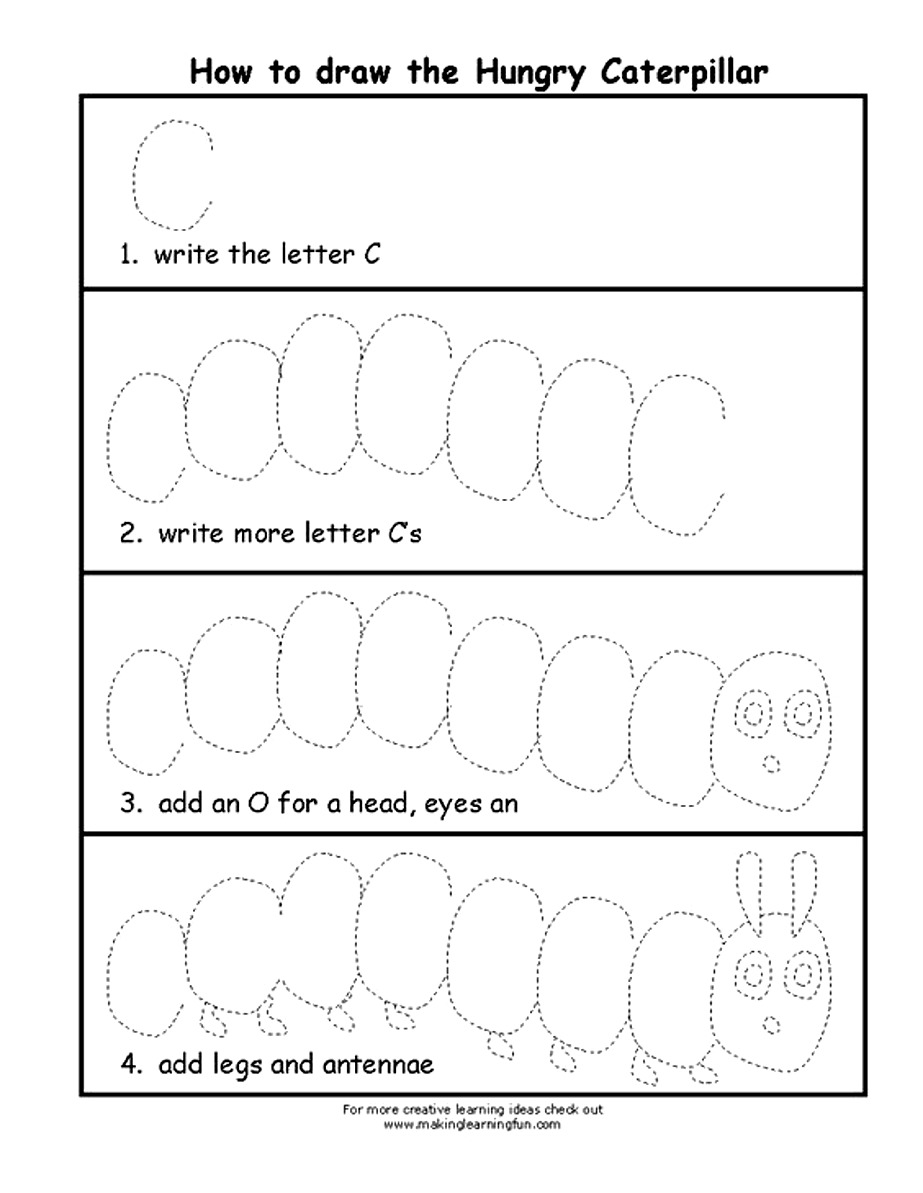
Kinders had fun learning about different kinds of caterpillars, what caterpillars eat and the huge word metamorphosis.
They were also introduced to two artists connected to the project: Eric Carle world renown artist/author and scientist/illustrator Maria Sibylla Merian




Human skeleton
4th, 5th and 6th grade focused on the Human skeleton, body proportions, skulls and new approaches to portraiture. Here are some of their art influences for the session.
The human skeleton consists of 206 bones. We are actually born with more bones (about 300), but many fuse together as a child grows up. These bones support your body and allow you to move. Bones contain a lot of calcium (an element found in milk, broccoli, and other foods). Bones manufacture blood cells and store important minerals.
The longest bone in our bodies is the femur (thigh bone). The smallest bone is the stirrup bone inside the ear. Each hand has 26 bones in it. Your nose and ears are not made of bone; they are made of cartilage, a flexible substance that is not as hard as bone.
Joints: Bones are connected to other bones at joints. There are many different types of joints, including: fixed joints (such as in the skull, which consists of many bones), hinged joints (such as in the fingers and toes), and ball-and-socket joints (such as the shoulders and hips).
Published for educational purposes only:


 |
| Jean-Michel Basquiat at work |
Norval Morrisseau
3rd grade students were introduced to the art work of Norval Morrisseau in connection to their Bear Project
All materials reproduced for educational purposes:
Norval Morrisseau, artist (born 14 March 1932 in Sand Point Reserve, near Beardmore, ON; died 4 December 2007 in Toronto, ON). Morrisseau was a self-taught artist of Ojibwa ancestry (his Ojibwa name, which appears in syllabics on his paintings, means "Copper Thunderbird") and he originated the pictographic style, or what is referred to as "Woodlands School," "legend painting" or "x-ray art." This style is a fusion of European easel painting with Ojibwe Midewiwin Society scrolls and pictography of rock paintings. Introduced to the Canadian public at the Pollock Gallery, Toronto, in 1962, Morrisseau was the first artist of First Nations ancestry to break through the Canadian professional white-art barrier. Throughout the 1960s Morrisseau's pictographic style grew in popularity and was often perceived by other Cree, Ojibwe and Ottawa artists as a tribal style, to be adapted for their own cultural needs. By the 1970s younger artists painted exclusively in his genre.
For Morrisseau, the 1970s were a time of struggle to reconcile traditional Midewiwin and Christian religions in his art and personal life. Combining his Ojibwa heritage, instilled in him by his maternal grandfather, Moses Nanakonagos, with the religion Eckankar, his works during the 1980s became more focused on spiritual elements. Morrisseau continued to study Ojibwe shamanistic practices until late in his life, which he believed elevated his work to a higher plane of understanding.
Norval Morrisseau was presented with the Order of Canada in 1978. In 2006, the National Gallery of Canada mounted Norval Morrisseau - Shaman Artist, a travelling retrospective exhibition of the artist's work.
source
https://www.thecanadianencyclopedia.ca/en/article/norval-morrisseau


Bears
Third grade continues with their animal study and connections to First Nation folktales and art.
They used observation, information to create with imagination their own bear portraits.
16 BEAR FACTS
·
Only
the polar bear is a true carnivore. All other bears are omnivores- eating both
plants and meat.
·
The
only species of bear that does not move its ears to pick up sound is the giant
panda.
·
Bears
are bowlegged. This gives them better grip and balance.
·
Bears
have never lived in Australia or Antarctica. Although bears do not currently
live in Africa, bear fossils have been found there. Scientists are unsure why
bears do not live in Africa today.
·
The
sloth bear has the shaggiest fur. The sun bear has the shortest fur so it can
keep cool in the hot forests of Southeast Asia.
·
When
U.S. President Theodore (Teddy) Roosevelt refused to shoot a black bear cub on
a hunting trip, a cartoon featured the event, and soon stuffed toy
manufacturers popularized “Teddy’s bear.”
·
Because
bears can walk short distances on their hind legs, some Native Americans called
them “the beast that walks like a man.”
·
Spectacled
bears are the only wild bears that live in South America.
·
A
polar bear can swim up to 100 miles without resting and a swimming polar bear
can jump 8 ft. (2.4 m) out of the water to surprise a seal.
·
Panda
bears have an extra “thumb” (which is actually an extra-large wrist bone) just
for holding onto bamboo stalks. A panda bear can eat over 45 lbs. (20.4 kg) of
bamboo per day.
·
Sloth
bears’ favorite food is termites. These bears have no front teeth, so they
easily suck out insects from their nests like a vacuum cleaner. They can also
seal their nostrils for better suction.
·
A
male bear is called a boar or a he-bear. A female bear is called a sow or a
she-bear. A group of bears is called a sleuth or sloth.
·
The
symbol of the United Russia Party is a bear. In fact, bears have traditionally
not only been a symbol of pride and power in Russia, but have also been common
images in fairy tales and myth.
·
The
name “grizzly bear” refers to the silver-tipped or “grizzled” hair of a brown
bear.
·
The
Sun bear is the smallest of the bears and is about the size of a large dog. It
gets its name from a blond chest patch of fur that looks like a setting sun.
Sun bears are also known as honey bears.
· Baloo, from The Jungle Book, is a sloth bear.
all materials for educational purposes:


Subscribe to:
Posts (Atom)